लेझरला व्हेंटिलेशनची गरज आहे का, असे विचारल्यास प्रामाणिक उत्तर एका शब्दात मिळते; तर उपयुक्त उत्तर काय तयार करायचे आहे हे स्पष्ट करते. या मार्गदर्शिकेत प्रत्येक सामग्रीतून काय बाहेर पडते, हवा बाहेर सोडावी की गाळून पुन्हा फिरवावी, आणि आवरणाला खरोखर किती हवेच्या प्रवाहाची गरज आहे, या सर्व गोष्टींचा समावेश आहे.
राउटरमधून निघणारे चिप्स आणि धूळ ही एक वेगळी प्रणाली आहे, जी आधीच यात समाविष्ट आहे. सीएनसी वुड राउटर्ससाठी धूळ गोळा करण्याचे मार्गदर्शकहे पान धूर आणि वायू हाताळते.
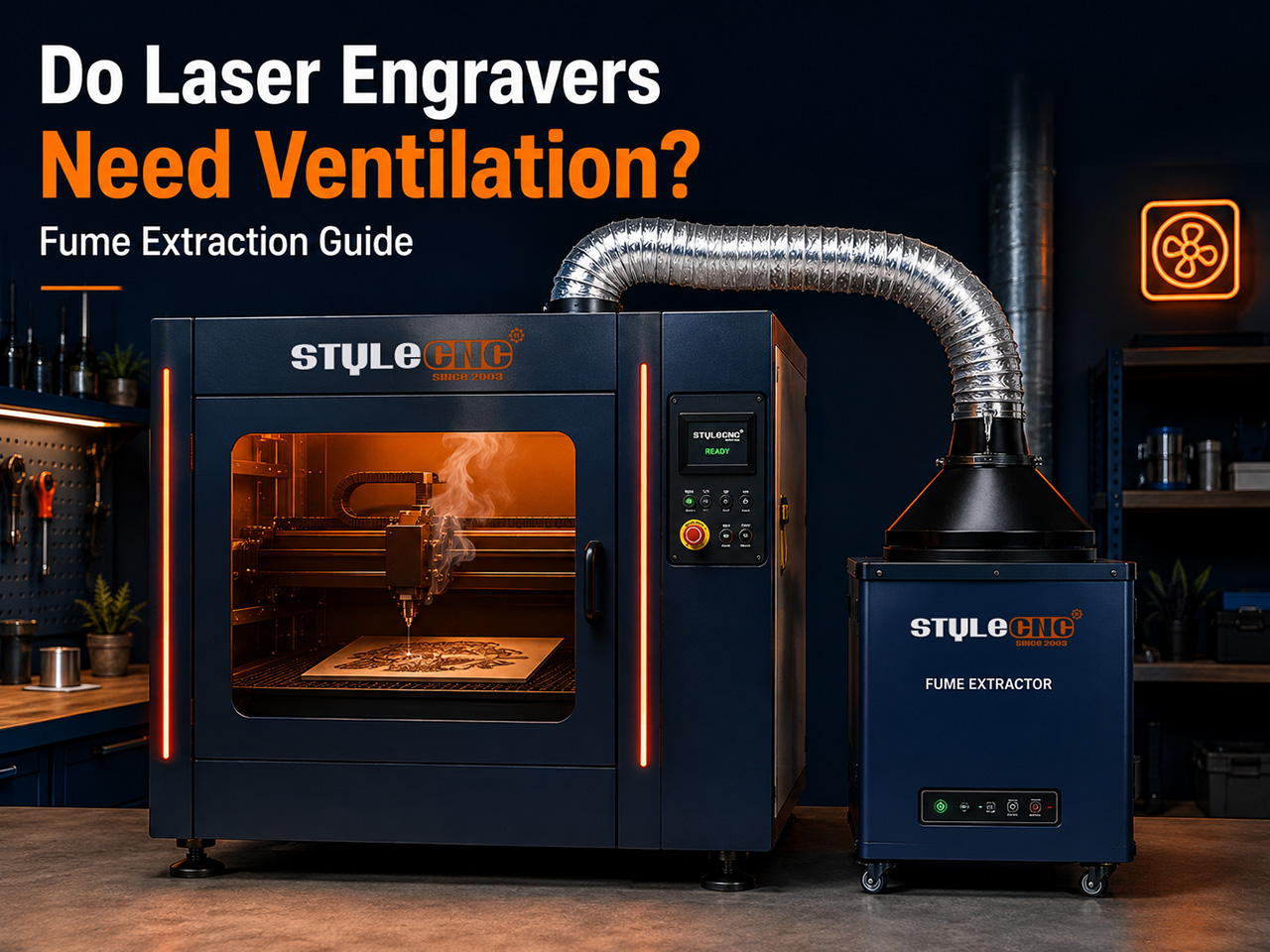
थोडक्यात उत्तर नेहमीच होय असते.
प्रत्येक प्रक्रियेत पदार्थाचे बाष्पीभवन होते आणि बाष्पीभवन झालेल्या पदार्थाचे हवेत सूक्ष्म कण आणि वायूंमध्ये रूपांतर होते. ही गोष्ट प्लायवूडवर चालणाऱ्या ५ वॅटच्या डायोडला आणि औद्योगिक कॅबिनेटला सारखीच लागू होते.
वास हा एक धोक्याचा इशारा आहे, तो स्वतः धोका नाही. लेझरच्या धुराचे सूक्ष्म कण बहुतांशी गंधहीन आणि अदृश्य असतात, म्हणूनच OSHA लेझरमुळे निर्माण होणाऱ्या हवेतील प्रदूषकांना आरामाचा मुद्दा न मानता, कामाच्या ठिकाणी होणारा धोका मानते.
प्रत्येक नियम लेसर खोदकाम मशीन नियम सोपा आहे: जर किरणपुंज त्याला स्पर्श करेल, तर त्यातून निर्माण होणारे उप-उत्पादने घराबाहेर किंवा फिल्टरच्या आत राहतील, खोलीतील हवेत कधीही नाही.
प्रत्येक पदार्थ हवेत काय सोडतो
ॲक्रिलिक स्वतःचा मूलभूत घटक, एमएमए मोनोमर, बाहेर टाकतो, ज्याला एक तीव्र सॉल्व्हेंटचा वास असतो जो लगेच जाणवतो. ते हाताळायला सोपे असून त्याचा प्रवाह चांगला असतो, आणि संपूर्ण चित्र व्यवस्थित बसते. STYLECNC'च्या मार्गदर्शकावर लेझर कटिंग ॲक्रेलिक विषारी आहे की नाही.
एमडीएफ त्याच्या गोंदातून लाकडाच्या नेहमीच्या कणांमध्ये फॉर्मल्डिहाइड मिसळते आणि ईपीएच्या घरातील हवेच्या मार्गदर्शक तत्त्वांनुसार या संयुगाकडे विशेष लक्ष वेधले जाते. भरीव लाकूड अधिक सौम्य असते, पण तरीही त्यातून सूक्ष्म धूर आणि अल्डीहाइड्स बाहेर पडतात.
टंबलर आणि पॅनेलवरील पावडर कोटच्या क्षरणामुळे मिश्रित सेंद्रिय पदार्थ आणि रंगद्रव्याचे कण बाहेर पडतात, आणि बेअर-मेटल मार्किंगमुळे मेटल ऑक्साईडचा धूर निर्माण होतो, म्हणूनच अगदी कॉम्पॅक्ट फायबर लेसर मार्किंग मशीन हूडला त्याचा फिल्टर मिळायलाच हवा.
पीव्हीसी आणि विनाइलवर कडक बंदी आहे. त्यातील क्लोरीन वायूच्या स्वरूपात बाहेर पडतो, जो ओलाव्याच्या संपर्कात येताच क्षरणकारक बनतो आणि एकाच फटक्यात ऑप्टिक्स, रेल्स आणि एअरवेजवर हल्ला करतो. नाही. CO2 लेझर कटिंग मशीन प्रतिकारशक्ती आहे, आणि कोणतीही नोकरी फायद्याची नाही.
डक्टेड एक्झॉस्ट विरुद्ध फिल्टर्ड एक्स्ट्रॅक्टर
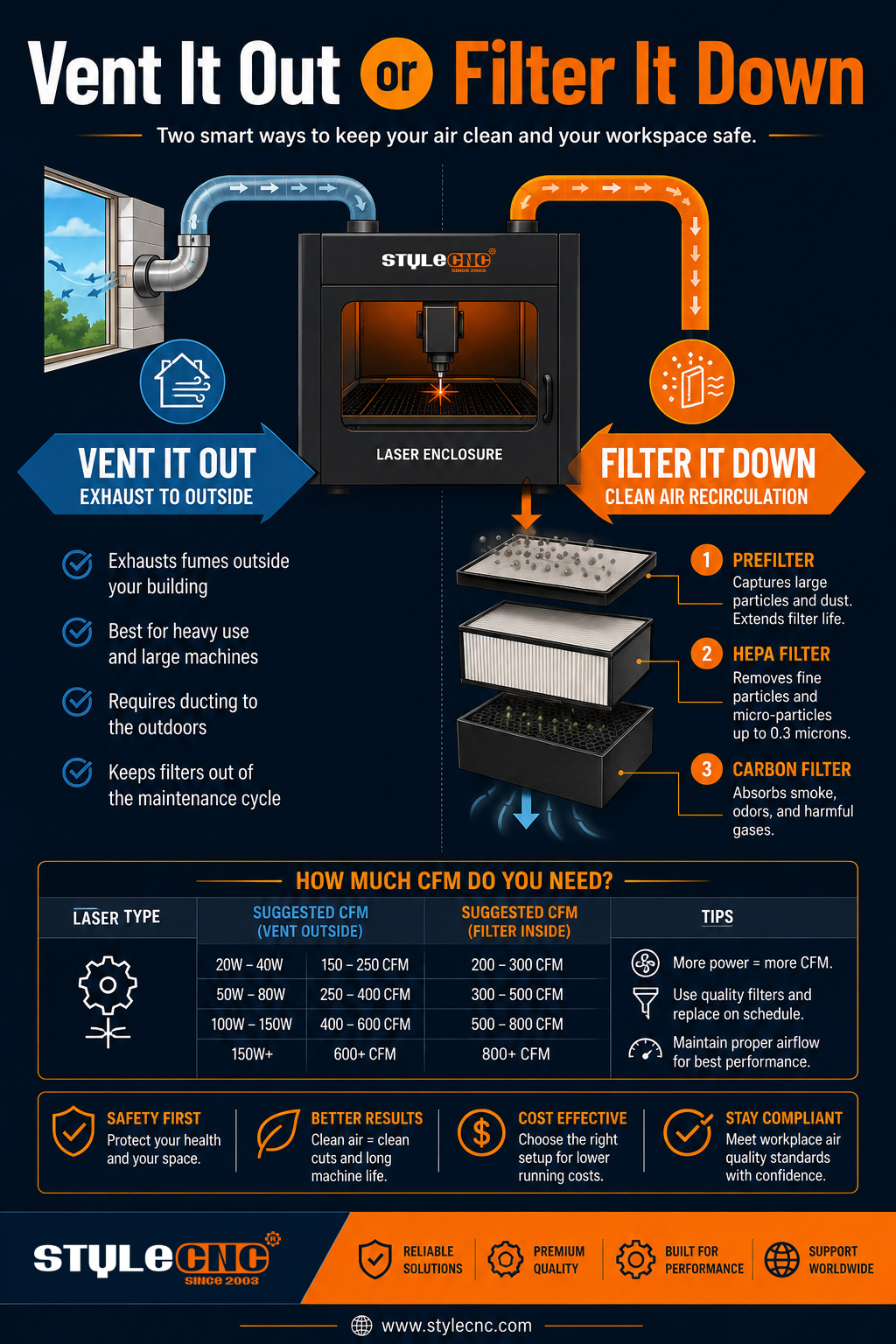
मार्ग एक सर्वकाही एका सीलबंद डक्टमधून बाहेर पाठवतो. मार्ग २ सर्वकाही टप्प्याटप्प्याने एका युनिटमध्ये, जसे की... लेझर मशीनसाठी एअर फिल्टर फ्युम एक्स्ट्रॅक्टरत्यानंतर, शुद्ध केलेली हवा खोलीत परत सोडते.
| विशेषता | डक्टेड एक्झॉस्ट आउटडोअर्स | फिल्टर केलेला धूर शोषक |
| मापन | सामान्य हवेचा प्रवाह २००-१००० CFM इनलाइन पंखे | सामान्य वायुप्रवाह १००-५०० CFM रेटिंग असलेली युनिट्स |
| आगाऊ खर्च | खाली: पंखा, डक्ट, वॉल प्लेट | उच्च: बहु-स्तरीय फिल्टर केलेले युनिट |
| चालू खर्च | पंख्याची वीज फक्त | वेळापत्रकानुसार मीडिया फिल्टर करा |
| स्थान | भिंत किंवा खिडकीचा मार्ग आवश्यक आहे | मशीनच्या जवळ कुठेही बसतो |
| गंध नियंत्रण | वास इमारतीतून बाहेर पडतो | कार्बन स्टेज ते घराच्या आत पकडते. |
| सर्वोत्तम फिट | बाहेर प्रवेश असलेली निश्चित दुकाने | भाड्याची घरे, कार्यालये, थंड हवामान |
अनेक दुकाने दोन्ही वापरतात: रोजच्या वापरासाठी डक्टेड एक्झॉस्ट आणि हिवाळ्यातील रात्री व उशिरापर्यंतच्या कामासाठी फिल्टर केलेले युनिट.
हवेचा प्रवाह किती असावा: पंख्याचा आकार ठरवणे
आकार हा लेझरच्या वॅटेजवरून नाही, तर एनक्लोजरच्या व्हॉल्यूमवरून ठरवला जातो. दर काही सेकंदांनी हवेची संपूर्ण अदलाबदल करणे आणि सौम्य नकारात्मक दाबाने वास कॅबिनेटच्या आत रोखून धरणे, हे उद्दिष्ट आहे.
| मशीन क्लास | ठराविक संलग्नक | किमान हवेचा प्रवाह | डक्ट व्यास |
| मापन | आतील आकारमान, घन फूट | CFM, कंसात m³/h सह | मिमी, कंसात इंचांसह |
| डेस्कटॉप डायोड आवरण | 8-15 | ६००-१००० (१०२०-१७०० मी³/तास) | २०० (८ इंच) |
| डेस्कटॉप CO2 कॅबिनेट | 10-20 | ६००-१००० (१०२०-१७०० मी³/तास) | २०० (८ इंच) |
| कपाट CO2, 60W ते 100W | 25-45 | ६००-१००० (१०२०-१७०० मी³/तास) | २०० (८ इंच) |
| हुड असलेला फायबर मार्कर | 4-8 | ६००-१००० (१०२०-१७०० मी³/तास) | ७५-१०० (३-४ इंच) |
| मोठा फ्लॅटबेड किंवा ड्युअल हेड | 60 आणि वर | ६००-१००० (१०२०-१७०० मी³/तास) | २०० (८ इंच) |
फॅन बॉक्सवरील रेटिंग्जमध्ये डक्टचा वापर गृहीत धरलेला नसतो. प्रत्यक्ष वळणांच्या मार्गांवर डक्टची कार्यक्षमता कमी असते, त्यामुळे मार्ग लांब असल्यास पुढच्या मोठ्या आकाराचा बॉक्स खरेदी करा.
खोलीत हवेचा एक पूरक मार्ग तयार करा आणि झाकणाजवळ धूर चाचणी करून हवेच्या प्रवाहाची खात्री करा. मोठ्या प्रमाणातील उत्पादनासाठी, NIOSH ची एक्सपोजर संसाधने बुकमार्क करण्याजोगी संदर्भ सामग्री आहे.
लक्षात ठेवण्यासारखे महत्त्वाचे आकडे
• लेझरच्या धुराचे सूक्ष्म कण २.५ मायक्रॉनपेक्षा खूपच लहान असतात, जो आकार फुफ्फुसांच्या खोलवरच्या ऊतींपर्यंत पोहोचतो.
• एका ९० अंशाच्या कोपरामुळे डक्टच्या निर्धारित वायुप्रवाहाचा लक्षणीय वाटा कमी होऊ शकतो, म्हणून प्रथम सरळ रेषांचे नियोजन करा.
• कार्बन टप्पे सहसा HEPA टप्प्यांच्या आधी संपतात; वासाचा उद्रेक हे बदलाचे संकेत आहे.
• आवरणाच्या आत नकारात्मक दाब निर्माण करणे हे उद्दिष्ट आहे: हवा आतच गळली पाहिजे, कधीही बाहेर जाऊ नये.
• दर काही सेकंदांनी आवरणातील हवा पूर्णपणे बदलल्याने व्ह्यूइंग विंडो मोकळी राहते आणि ऑप्टिक्स जास्त काळ स्वच्छ राहतात.
ऑपरेटर प्रत्यक्षात विचारतात असे प्रश्न
खिडक्यांमध्ये कोणताही बदल न केलेल्या भाड्याच्या अपार्टमेंटमध्ये कोणती व्यवस्था उपयोगी पडते?
एक सीलबंद आवरण जे भरपूर कार्बन असलेल्या फिल्टर एक्स्ट्रॅक्टरला जोडलेले आहे. भिंतीतून काहीही आत जात नाही, घरमालकाला कोणताही त्रास होत नाही आणि फिल्टर मीडिया हाच तुमचा एकमेव चालू खर्च राहतो.
विंडो बॉक्स फॅन लहान डायोडचे आवरण हाताळू शकतो का?
तो हवा हलवतो पण त्याचा स्थिर दाब जवळजवळ नसतो, त्यामुळे डक्टमधील काही वळणांमुळे तो निकामी होतो. त्याच किमतीचा एक चांगला रेट केलेला इनलाइन डक्ट फॅन प्रत्यक्ष वापरात त्याच्यापेक्षा जास्त चांगली कामगिरी करतो.
बदलीची हवा कुठून येते?
खोलीतून हवा बाहेर येते, म्हणून त्याला एक मार्ग द्या. दरवाजा थोडा उघडा किंवा व्हेंट लावा; बंद खोलीमुळे पंख्याला पुरेशी हवा मिळत नाही आणि बॉक्सवर छापलेला हवेच्या प्रवाहाचा आकडा कधीच पोहोचत नाही.
पंख्याचे नुकसान करणाऱ्या सामान्य चुका
• खोलीत हवा आत येण्यासाठी कोणताही मार्ग नसताना शक्तिशाली एक्झॉस्ट फॅन चालवणे.
• पोटमाळ्यामध्ये, तळघरामध्ये किंवा जोडलेल्या गॅरेजमध्ये हवा बाहेर काढणे.
• खिडकीकडे जाताना ५ वळणांमधून फ्लेक्स डक्टला लोंबकळू देणे.
• एनक्लोजरच्या व्हॉल्यूमऐवजी लेझर वॅटेजनुसार फॅनचा आकार निश्चित करणे.
• कार्बन स्टेज बदलण्यापूर्वी वासाची वाट पाहणे.
• घाईचे काम पूर्ण करण्यासाठी पीव्हीसी किंवा विनाइल फक्त एकदाच कापणे.
• झाकणाच्या सीलकडे दुर्लक्ष करणे; गळके आवरण सर्वोत्तम पंख्यालाही मात देते.
• अदृश्य सूक्ष्म कण वाहून जात असताना, दुर्गंधीला धोका मानणे.
व्हेंटिलेशन सेटअप चेकलिस्ट
✓ प्रथम मार्ग निवडा: नलिकेद्वारे बाहेर, किंवा गाळणीयुक्त पुनर्प्रवाह.
✓ हवेच्या प्रवाहाचा आकार लेझरच्या वॅटेजवरून नव्हे, तर एनक्लोजरच्या व्हॉल्यूमवरून ठरवा.
✓ डक्टचे मार्ग लहान, सरळ आणि गुळगुळीत भिंतींचे ठेवा.
✓ खोलीत हवा खेळती ठेवण्यासाठी एक मार्ग तयार करा.
✓ आवरणाची धूर चाचणी करा आणि नकारात्मक दाबाची खात्री करा.
✓ फिल्टर वापराचे तास नोंदवा आणि ब्रेकथ्रू होण्यापूर्वी कार्बन बदला.
✓ मटेरियल शेल्फमधून पीव्हीसी, विनाइल आणि अज्ञात प्लॅस्टिकवर बंदी घाला.
वारंवार विचारले जाणारे प्रश्न
लाकडावर कोरीवकाम करणे खरंच हानिकारक आहे की फक्त दुर्गंधीयुक्त आहे?
दोन्ही. लाकडाच्या धुरामध्ये फुफ्फुसांच्या खोलवरच्या ऊतींपर्यंत पोहोचू शकणारे सूक्ष्म कण, तसेच जळण्यामुळे तयार झालेले अल्डीहाइड्स असतात. एका कामामुळे वास येतो; तर अनेक वर्षे हवेशीर नसलेल्या कामांमुळे श्वसनसंस्थेवर दुष्परिणाम होतात. कोणत्याही प्लास्टिकप्रमाणेच साध्या पाइन लाकडालाही हवा बाहेर काढण्याच्या त्याच शिस्तीने हाताळा.
नवीन फिल्टर लावूनही माझ्या एक्स्ट्रॅक्टरमधून वास का येतो?
दुर्गंधीचा प्रादुर्भाव होण्याचा अर्थ सहसा असा होतो की कार्बनचा थर संतृप्त झाला आहे किंवा खराब सीलमधून हवा आत शिरत आहे. सर्वप्रथम गॅस्केट आणि फिल्टरचा क्रम तपासा: प्रीफिल्टर, त्यानंतर HEPA, आणि मग कार्बन. HEPA फिल्टर संपण्यापूर्वीच कार्बन फिल्टर संपतो, त्यामुळे दुर्गंधीयुक्त वस्तूंवर तो अनेकदा दुप्पट वेळा बदलण्याची गरज पडते.
मी बाहेरच्या ऐवजी गॅरेज किंवा पोटमाळ्यामध्ये हवा सोडू शकतो का?
नाही. दोन्ही जागांमधून धूर पुन्हा राहण्याच्या जागेत झिरपतो, त्यामुळे तो वळसा घालून परत येतो. डक्टचे टोक बाहेरील भिंतीला किंवा खिडकीच्या प्लेटला बॅकड्राफ्ट डॅम्पर लावून जोडा आणि कापडी डक्ट टेपऐवजी फॉइल टेपने नळी सीलबंद ठेवा.
माझा हवेचा प्रवाह खरोखर पुरेसा आहे हे मला कसे कळेल?
धुराकडे लक्ष ठेवा. बीम थांबल्यानंतर काही सेकंदातच तो आउटलेटच्या दिशेने पसरून नाहीसा झाला पाहिजे. रेंगाळणारी धूसरता, झाकणातून बाहेर येणारा वास किंवा दरवाजाच्या दिशेने जाणारा धूर, या सर्व गोष्टींवरून असे सूचित होते की फॅन लहान आकाराचा आहे किंवा डक्टमध्ये तो अडकत आहे.
माझ्याकडून एकदा चुकून पीव्हीसी कापले गेले. ते किती वाईट आहे?
एकदा संपर्क आल्यास यंत्र नष्ट होणार नाही, परंतु बाहेर पडणारा वायू आर्द्रतेसोबत आम्ल तयार करतो, जे ऑप्टिक्स, रेल्स आणि फुफ्फुसांवर सारख्याच प्रकारे खड्डे पाडते. ती जागा पूर्णपणे हवेशीर करा, आतील भाग पुसून घ्या आणि ते साहित्य बाजूला काढा. वारंवार संपर्क आल्यासच खरे नुकसान वाढत जाते.
फायबर मेटल मार्कर्सना सुद्धा एक्स्ट्रॅक्शनची गरज असते का?
होय. मार्किंगमुळे धातूचे बाष्पीभवन होऊन ऑक्साईडचा धूर तयार होतो, आणि कोटिंग जळल्यामुळे रंगवलेल्या किंवा कोटिंग केलेल्या भागांवर सेंद्रिय पदार्थ जमा होतात. हे प्रमाण कमी असल्यामुळे, एक लहान हूड आणि एक साधा एक्स्ट्रॅक्टर हे काम हाताळू शकतात, परंतु धातूचा धूर थेट श्वासावाटे घेणे ही वेल्डरसाठी एक मोठी चूक आहे.
कार्बन आणि HEPA टप्पे किती वेळा बदलण्याची गरज असते?
कार्बन फिल्टरची ओळख वासावरून होते: आउटलेटवर वासाचा पहिलाच सुगावा लागल्यास फिल्टरमध्ये गळती झाल्याचे समजते. HEPA फिल्टरची ओळख दाबातील घट किंवा तासांवरून होते, आणि ते अनेकदा अनेक कार्बन सायकल्सपर्यंत टिकतात. प्रत्येक मटेरियलसाठी वापराचे तास नोंदवा, कारण एका शांत तिमाहीपेक्षा ॲक्रेलिकचा जास्त वापर असलेला एक महिना फिल्टर्सना अधिक वेगाने खराब करू शकतो.
लांब नलिकेमुळे कामगिरीवर खरंच इतका परिणाम होतो का?
होय. प्रत्येक कोपरा आणि प्रत्येक मीटर कडक लवचिक नळी प्रतिरोध वाढवते, आणि त्यामुळे लहान इनलाइन पंख्यांचा प्रवाह लवकर मंदावतो. मार्ग लहान ठेवा, शक्य असेल तिथे लवचिक नळीऐवजी गुळगुळीत-भिंतीची नळी वापरा, आणि मार्ग लहान करता येत नसेल तर पंख्याची क्षमता वाढवा.
चांगल्या वायुवीजनामुळे तयार झालेल्या भागांवरील दुर्गंधी दूर होईल का?
फक्त अंशतः. हवेतील वास एक्झॉस्टसोबत निघून जातो, पण वर्कपीसवर चिकटून बसलेल्या अवशेषांचा स्वतःचा वास टिकून राहतो. कामादरम्यान एअर असिस्ट, दिसणाऱ्या भागांवर मास्किंग टेप आणि नंतर अल्कोहोल वाइपने पार्ट हाताळणे; खोलीतील वास एक्स्ट्रॅक्टर हाताळतो.